| Phase | Time | Intensity |
|---|---|---|
| Preparation | 15 minutes | Low |
| Initial Simmer | 30 minutes | Medium |
| Slow Simmer | 12-24 hours | Low |
| Straining | 20 minutes | Medium |
| Cooling and Setting | 6-8 hours | None (passive) |
| Total Time | 19-33 hours | Low to Medium |
Instructions
Phase 1: Preparation (15 minutes, Low Intensity)
-
Prepare the Bones: If using raw bones, rinse them under cold water to remove any impurities. For roasted bones, preheat your oven to 200°C (400°F), place bones on a baking sheet, and roast for 30 minutes until golden brown. Roasting enhances flavor and color.
-
Combine Ingredients: Place the bones in your stockpot or slow cooker. Add the apple cider vinegar and enough filtered water to cover the bones by about 2 inches (5 cm). Let sit for 15-20 minutes; the acid helps draw minerals from the bones.
-
Add Vegetables and Seasonings: Add carrots, celery, onion, garlic, bay leaves, peppercorns, and any optional ingredients like ginger or turmeric.
Phase 2: Initial Simmer (30 minutes, Medium Intensity)
-
Bring to a Boil: Place the pot over medium-high heat and bring to a gentle boil. This should take about 15-20 minutes.
-
Skim Impurities: As the broth begins to boil, a foam or scum will rise to the surface. Use a skimmer or spoon to remove this foam. This step is crucial for achieving a clear, clean-tasting broth.
-
Reduce Heat: Once the initial foam is removed, reduce the heat to low. The broth should be at a very gentle simmer—bubbles should barely break the surface.
Phase 3: Slow Simmer (12-24 hours, Low Intensity)
-
Maintain Low Simmer: Allow the broth to simmer uncovered or partially covered for 12-24 hours. Chicken bones require less time (12-18 hours), while beef bones benefit from longer simmering (18-24 hours). Check periodically to ensure the water level remains above the bones; add hot water if needed.
-
Add Parsley and Salt: In the last 30 minutes of simmering, add fresh parsley and sea salt. Adjust seasoning to taste.
-
Test for Gelatin: To test if your broth will gel, place a small spoonful in a chilled dish and refrigerate for 10 minutes. If it sets to a jelly-like consistency, it’s ready.
Phase 4: Straining (20 minutes, Medium Intensity)
-
Remove Solids: Using tongs, carefully remove large bones and vegetables from the pot. Discard or compost them.
-
Strain the Broth: Place a fine-mesh strainer lined with cheesecloth over a large bowl or pitcher. Carefully pour the broth through the strainer to remove any remaining particles.
-
Cool Slightly: Allow the strained broth to cool for 15-20 minutes before transferring to containers.
Phase 5: Cooling and Setting (6-8 hours, Passive)
-
Transfer to Containers: Pour the broth into glass jars or containers, leaving about an inch of space at the top.
-
Refrigerate: Place the containers in the refrigerator and allow them to cool completely. The broth will transform into a firm, jelly-like consistency within 6-8 hours.
-
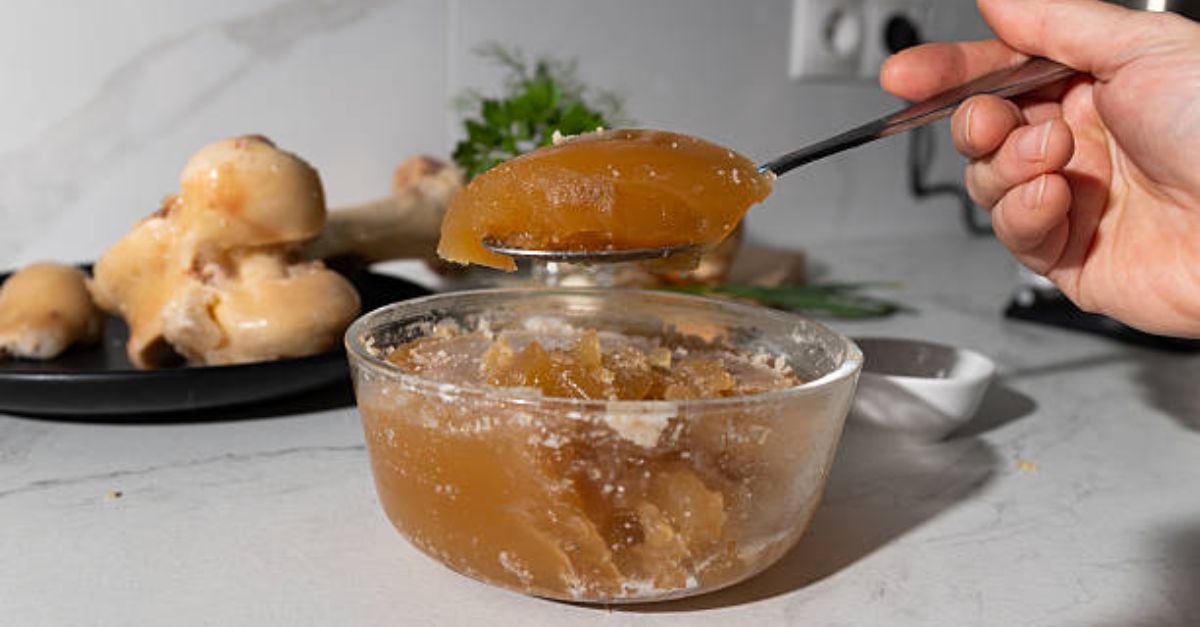
Check the Set: Once fully chilled, the gelled bone broth jelly should wobble when shaken and hold its shape when scooped. If it remains liquid, it may need to be re-simmered with additional gelatinous bones or unflavored gelatin.
Serving Suggestions
Gelled bone broth jelly can be enjoyed in numerous ways:
-
Straight from the Jar: Scoop and eat as a nourishing snack.
-
Cubed in Soups: Add cubes to hot soups or stews for extra flavor and nutrition.
-
Spread on Toast: Mash with a fork and spread on sourdough or crackers.
-
Smoothies: Blend a scoop into your morning smoothie for a protein boost.
-
Sauté Base: Use as a cooking base for vegetables or grains.
Storage and Shelf Life
-
Refrigerator: Store in sealed glass jars for up to 5-7 days.
-
Freezer: Pour into freezer-safe containers or ice cube trays and freeze for up to 6 months. Thaw in the refrigerator overnight before use.
Nutrition Information
Per 1 cup (240 ml) serving of gelled bone broth jelly (approximate values, varies by bone type and simmering time):
| Nutrient | Amount |
|---|---|
| Calories | 40-60 kcal |
| Protein | 8-10 g |
| Carbohydrates | 0-1 g |
| Fat | 0-2 g |
| Collagen/Gelatin | 6-8 g |
| Sodium | 300-500 mg |
| Potassium | 100-150 mg |
| Calcium | 20-30 mg |
| Magnesium | 10-15 mg |
| Phosphorus | 15-25 mg |