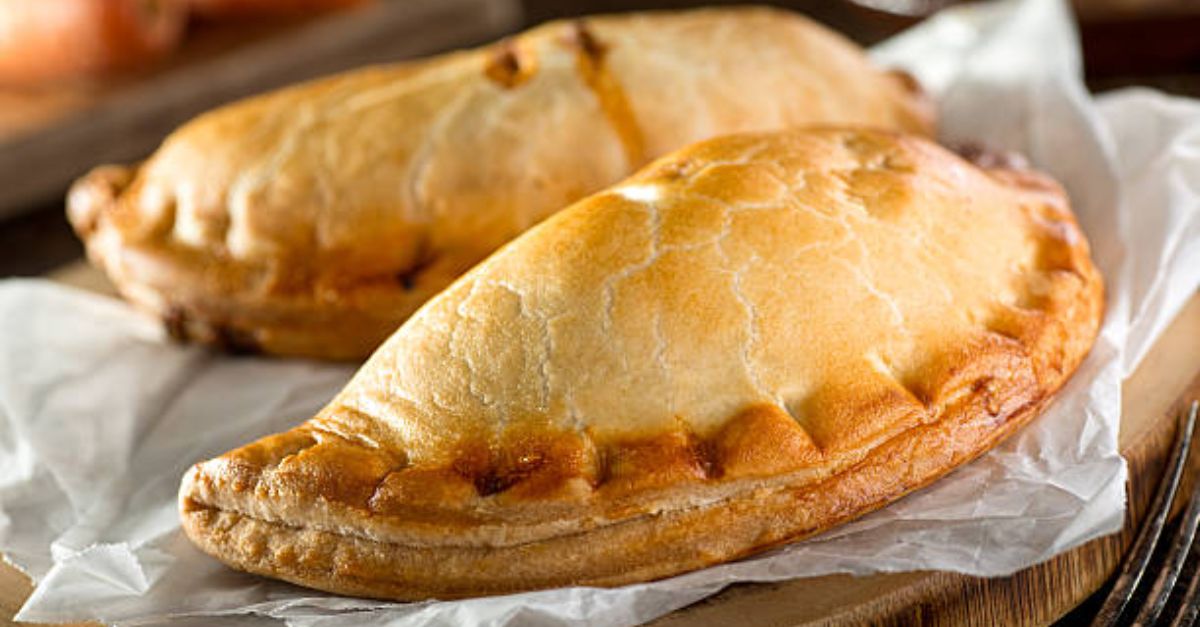
Recipe Name: Classic Cornish Pasties
Yield: 4 large pasties
Preparation Time: 45 minutes
Chilling Time: 1 hour (for pastry)
Cooking Time: 45-50 minutes
Total Time: Approximately 2 hours 35 minutes
Intensities
Skill Level: Medium. The pastry requires a delicate touch to keep it short and flaky. The crimping technique also takes a little practice but is very forgiving.
Effort Intensity: Moderate. This is not a “dump and stir” recipe. It requires multiple steps, chilling time, and hands-on shaping and crimping.
Flavour Intensity: High. The filling is a powerhouse of savoury, beefy flavour, with the sweetness of the root vegetables coming through beautifully. The rich, buttery pastry balances it perfectly.
Ingredients
For the Pastry:
500 g (4 cups) plain flour (all-purpose flour)
125 g (1/2 cup) unsalted butter, chilled and cut into small cubes
125 g (1/2 cup) lard or vegetable shortening, chilled and cut into small cubes
1 teaspoon fine sea salt
Approx. 150-175 ml (2/3 cup) ice-cold water
1 large egg, beaten (for egg wash)
For the Filling:
500 g (1.1 lb) beef skirt or chuck steak, cut into 1.5 cm (½-inch) dice
250 g (2 medium) potatoes, such as Maris Piper or King Edward, peeled and cut into 1 cm (⅓-inch) dice
250 g (1 medium) swede (rutabaga), peeled and cut into 1 cm (⅓-inch) dice
1 large onion, finely chopped
2 teaspoons fine sea salt
1 ½ teaspoons freshly ground black pepper
2 tablespoons unsalted butter, cut into small pieces
Method
Step 1: Make the Pastry
In a large bowl, sift the flour and salt together.
Add the chilled cubes of butter and lard. Using your fingertips, rub the fats into the flour until the mixture resembles coarse breadcrumbs. Work quickly to keep the fat cold. Tip: You can also do this in a food processor using the pulse function.
Gradually add the ice-cold water, a tablespoon at a time, mixing with a butter knife or your hands until the dough just comes together to form a ball. You may not need all the water. The dough should be firm but not sticky.
Turn the dough out onto a lightly floured surface and gently knead it a couple of times to bring it together. Shape it into a flat disc, wrap it in cling film, and refrigerate for at least 1 hour. This allows the gluten to relax and the fats to re-solidify, resulting in a flakier pastry.
Step 2: Prepare the Filling
While the pastry is chilling, prepare the filling. In a large bowl, combine the diced beef, potato, swede, and onion.
Season generously with the salt and black pepper. Toss everything together well to ensure the seasonings are evenly distributed. The moisture from the vegetables will start to combine with the seasoning—this is exactly what we want.
Step 3: Assemble the Pasties
Preheat your oven to 200°C (400°F / Gas Mark 6). Line two large baking sheets with parchment paper.
Remove the pastry from the fridge. On a lightly floured surface, roll out the dough to about the thickness of a £1 coin (roughly 3-4mm). Use a plate or a bowl (about 20-23 cm / 8-9 inches in diameter) as a guide to cut out four circles. Re-roll the scraps if necessary.
Divide the filling evenly among the four pastry circles, placing the mound of filling in the centre of each one.
Top the filling on each pasty with a few small knobs of the unsalted butter. This is the secret to a rich, moist filling.
To seal, brush a little of the beaten egg around the edge of one half of each circle. Fold the empty half of the pastry over the filling to form a half-moon or D-shape.
Crucial Step – Crimping: To seal the pasty, you can use a fork, but for the traditional method, use your thumb and forefinger to pinch and fold the edge over itself, creating a crimped, rope-like seal. This is a hallmark of a true Cornish pasty.
Place the sealed pasties on the prepared baking sheets. Make a small slit on the top of each pasty to allow steam to escape. Brush the entire surface of each pasty with the remaining beaten egg to give them a beautiful, glossy golden colour.
Step 4: Bake
Bake the pasties in the preheated oven for 45-50 minutes, or until the pastry is deep golden brown and crisp.
Once baked, remove from the oven and allow them to rest on the baking sheet for 5-10 minutes before serving. This allows the filling to settle and the juices to redistribute, preventing them from being too runny.
How to Serve
Serve your Cornish pasties hot or cold. They are a complete meal in themselves. For a true West Country feast, serve them with a side of baked beans or a simple green salad. They are also the perfect picnic food.
Chef’s Notes
Cutting the Vegetables: It is important to cut the beef, potatoes, and swede into small, uniform dice. This ensures that they all cook through to perfect tenderness within the baking time.
The Swede: Swede (rutabaga) is a non-negotiable ingredient in a classic Cornish pasty. If you absolutely cannot find it, you could substitute with turnip, but the flavour will be different.
Too Much Moisture? Make sure you don’t overfill the pasties. The filling should be mounded, but it’s better to be conservative than to have the filling juices leak out during baking.
Leftovers: These pasties reheat beautifully. You can reheat them in the oven at 180°C (350°F) for about 15-20 minutes to re-crisp the pastry.
Nutrition
Nutritional information is an estimate and is based on 1 serving (1 large pasty).
Nutrient Amount Per Serving
Calories 890 kcal
Total Fat 55 g
– Saturated Fat 28 g
Cholesterol 145 mg
Sodium 1500 mg
Total Carbohydrates 70 g
– Dietary Fiber 7 g
– Sugars 8 g
Protein 32 g