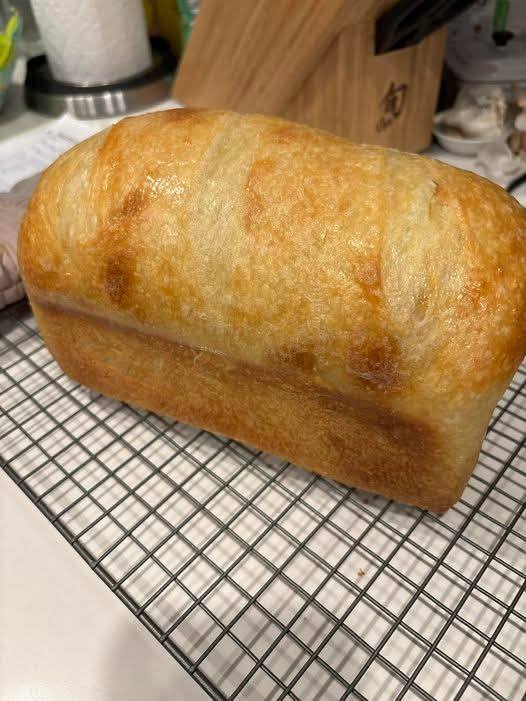
Active Prep: 30 minutes | Inactive (Rise Time): 8-14 hours | Bake Time: 45 minutes
Total Time: 9-15 hours
Difficulty Level: Medium
Intensity: Low active effort, high patience required
Yields: One 9×5 inch loaf (about 20 slices)
Introduction
This sourdough sandwich bread is the perfect marriage of tangy sourdough flavor and soft, pillowy texture ideal for everyday sandwiches. Unlike rustic sourdough boules, this recipe creates a perfectly square loaf with a tender crumb that holds up to spreads and fillings without crumbling. The long, slow fermentation develops rich flavor and makes the bread more digestible. While the process spans a day, the active work is minimal, and the reward is a wholesome, preservative-free loaf far superior to store-bought bread.
Ingredients
Levain (Starter Build)
-
60g (¼ cup) active, bubbly sourdough starter (100% hydration)
-
60g (½ cup) bread flour
-
60g (¼ cup) lukewarm water
Main Dough
-
All of the prepared levain
-
360g (1½ cups) lukewarm water
-
24g (2 tbsp) honey or maple syrup
-
24g (2 tbsp) neutral oil (e.g., avocado, sunflower), plus extra for greasing
-
500g (4 cups + 2 tbsp) bread flour
-
9g (1½ tsp) fine sea salt
For Finishing
-
Melted butter or additional oil for brushing (optional)
Equipment Needed
-
Digital kitchen scale (highly recommended for accuracy)
-
Large mixing bowl
-
9×5 inch loaf pan
-
Plastic wrap or damp towel
-
Bench scraper (optional but helpful)
-
Cooling rack
Method
Day 1: Evening Prep (The Levain)
1. Build Your Levain (8-12 hours before mixing dough):
-
About 8-12 hours before you plan to mix your dough, combine the 60g starter, 60g flour, and 60g water in a small jar or bowl.
-
Mix thoroughly, cover loosely, and let it sit at room temperature (70-75°F / 21-24°C is ideal). It is ready when it has doubled in size, is very bubbly, and passes the “float test” (a small spoonful dropped in water floats).
Day 2: Mixing, Bulk Fermentation & Shaping
2. Mix the Dough (Active: 15 mins):
-
In a large bowl, combine the entire levain, 360g water, honey, and oil. Use a whisk or fork to break up the levain until mostly dissolved.
-
Add the 500g bread flour and salt. Mix with a sturdy spoon or your hands until no dry flour remains. The dough will be shaggy and sticky. Cover and let rest (autolyse) for 30 minutes.
3. Bulk Fermentation (Inactive: 4-6 hours):
-
After the rest, perform a set of “stretch and folds”: Wet your hand, grab one side of the dough, stretch it upward, and fold it over the center. Rotate the bowl a quarter turn and repeat 4-5 times until you’ve gone around the bowl. This builds strength.
-
Cover the bowl and let rest for 30 minutes. Repeat this stretch-and-fold process 3-4 more times at 30-minute intervals. After the final fold, cover the bowl tightly and let the dough rise at room temperature until it has increased by about 50-75% (it should look puffy and alive, with some bubbles). This may take 3-5 hours total, depending on your kitchen’s temperature.
4. Shape the Loaf (Active: 10 mins):
-
Lightly grease your 9×5 inch loaf pan.
-
Turn the dough out onto a lightly floured surface. Gently press it into a rough rectangle, about the width of your loaf pan.
-
Fold the top third down to the center, then the bottom third up (like a letter). Pinch the seam.
-
Starting from the short end, roll the dough tightly into a log. Pinch the final seam and the ends closed.
-
Place the loaf seam-side down into the prepared pan. Press it gently to fit the corners.
5. Final Proof (Inactive: 2-6 hours, or Overnight):
-
Cover the pan lightly with plastic wrap or a damp towel. Let the dough rise until it crowns about 1 inch above the rim of the pan. This can take 2-4 hours at room temperature.
-
For a more flexible schedule: After shaping, you can place the covered loaf pan directly in the refrigerator for a cold, slow proof (8-14 hours). This deepens the flavor.
Day 2 (or 3): Baking & Cooling
6. Bake (Active: 5 mins, Inactive: 45 mins):
-
Preheat your oven to 375°F (190°C). If your dough was refrigerated, let it sit at room temperature while the oven heats.
-
Place the loaf pan on the center rack and bake for 40-45 minutes. The bread is done when it is deeply golden brown, the internal temperature reaches 205-210°F (96-99°C), and it sounds hollow when tapped on the bottom.
-
Optional: For a softer crust, brush the top with melted butter or oil immediately after removing from the oven.
7. Cool (CRUCIAL – Inactive: 2+ hours):
-
Remove the loaf from the pan and transfer it to a cooling rack. You must let it cool completely for at least 2 hours before slicing. Cutting into hot bread releases steam and results in a gummy, dense texture. This is the hardest but most important step!
Storage & Serving
-
Storage: Once completely cool, store in a bread bag or airtight container at room temperature for 4-5 days.
-
Freezing: For longer storage, slice the cooled loaf, place parchment between slices, and freeze in an airtight bag for up to 3 months. Toast slices directly from frozen.
Nutrition Information (Per Slice, 1/20 of loaf)
-
Calories: ~135 kcal
-
Total Fat: 1.8g
-
Saturated Fat: 0.2g
-
Cholesterol: 0mg
-
Sodium: 180mg
-
Total Carbohydrates: 26g
-
Dietary Fiber: 1g | Sugars: 1.5g
-
Protein: 4g