Total Time: 22-26 hours (Active: 45 minutes | Inactive: 21-25 hours)
Difficulty: Intermediate (Requires a mature sourdough starter)
Yield: 1 beautiful round loaf (Boule)
Culinary Tradition: French Artisan Baking
A Note From the Baker
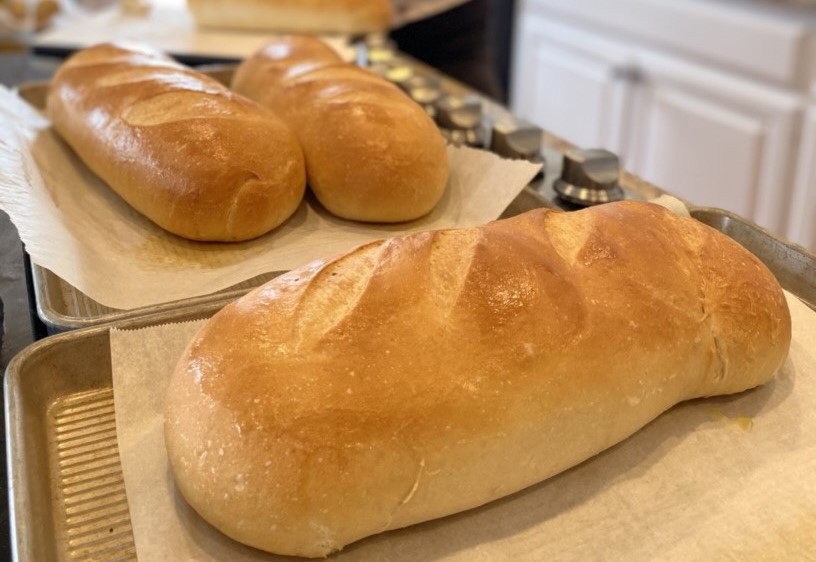
This isn’t just bread; it’s a ritual. True sourdough French bread, with its crackling crust, chewy, open crumb, and complex tang, cannot be rushed. It’s a beautiful dance between flour, water, wild yeast, and time. The extended fermentation is non-negotiable—it’s what develops the incredible flavor and digestibility. Set aside a day, embrace the process, and be rewarded with the most satisfying homemade bread imaginable.
Ingredients
For the Leaven (Made the Night Before):
40g (¼ cup) active, bubbly sourdough starter (100% hydration)
80g (⅔ cup) bread flour
80g (⅓ cup) lukewarm water
For the Final Dough:
All of the prepared leaven (about 200g)
375g (3 cups + 2 tbsp) bread flour (high-protein, such as King Arthur)
250g (1 cup + 1 tbsp) cool water (about 65°F/18°C)
9g (1½ tsp) fine sea salt
Rice flour, for dusting (optional, prevents sticking)
Equipment:
Digital kitchen scale (highly recommended for accuracy)
Large mixing bowl
Bench scraper
Banneton (proofing basket) or a medium bowl lined with a heavily floured kitchen towel
Razor blade or very sharp lame for scoring
Dutch oven with lid
Step-by-Step Instructions
Phase 1: Create the Leaven (Night Before, ~12 hours ahead)
Time: 5 minutes active | 10-12 hours inactive
Intensity: Low
Mix: In a small jar or bowl, combine the 40g active starter, 80g water, and 80g bread flour. Stir until no dry flour remains.
Ferment: Cover loosely and let it sit at room temperature (70-75°F / 21-24°C) for 10-12 hours, overnight is perfect. It’s ready when it’s very bubbly, has nearly doubled, and passes the “float test”: a small spoonful dropped in a glass of water should float.
Phase 2: Mix & Autolyse (Morning, Day 1)
Time: 10 minutes active | 30 minutes rest
Intensity: Low
Combine Flour & Water: In a large mixing bowl, combine the 375g bread flour and 250g cool water. Mix with your hands or a spatula until no dry patches remain. It will be a shaggy mass. Let this mixture (called the autolyse) rest, uncovered, for 30 minutes. This allows the flour to fully hydrate, developing gluten with minimal kneading.
Add Leaven & Salt: After 30 minutes, add all of the ripe leaven and the 9g of salt to the bowl.
Incorporate: Use wet hands to pinch and fold the ingredients together until fully combined. The dough will be sticky and messy—this is normal.
Phase 3: Bulk Fermentation & Stretch & Folds (Day 1)
Time: 20 minutes active, spread over 4 hours | 4 hours inactive
Intensity: Medium (requires attention)
First Rise: Cover the bowl with a damp towel or plastic wrap. Let it rest at room temperature for 4 hours. During this bulk fermentation, you will perform a series of “stretch and folds” to build strength in the dough.
Stretch & Folds (Perform 4 sets, spaced 30 minutes apart):
Set 1 (30 minutes in): Wet your hands. Grab the dough at one side, stretch it gently upward, and fold it over the center. Rotate the bowl a quarter turn and repeat 3-4 more times until you’ve gone around the bowl. The dough will tighten.
Cover and wait 30 minutes.
Repeat this process for 3 more sets (at 60, 90, and 120 minutes into the bulk fermentation). You’ll feel the dough transform from sticky and loose to smooth, strong, and elastic.
Final Rest: After the last fold, cover the dough and let it finish its 4-hour bulk ferment undisturbed. It should look puffy, have increased in volume by about 30-50%, and be full of bubbles.
Phase 4: Shape & Cold Proof (Afternoon, Day 1)
Time: 10 minutes active | 12-16 hours inactive
Intensity: Medium (requires a gentle touch)
Shape: Lightly flour your work surface. Gently turn the dough out. Using your bench scraper and floured hands, shape it into a tight round (a boule): fold the sides into the center, then flip seam-side down. Use the scraper to gently drag and rotate the dough, creating surface tension on top.
Prepare Proofing Basket: Generously dust a banneton or a towel-lined bowl with a mix of all-purpose and rice flour.
Proof: Place the dough seam-side UP into the prepared basket. This means the smooth, rounded side is facing down, touching the basket.
Cold Ferment: Cover the basket with a plastic bag and place it immediately in the refrigerator for 12-16 hours (overnight). This slow, cold proof is the magic step for incredible flavor and oven spring.
Phase 5: Bake! (Morning, Day 2)
Time: 5 minutes active | 45 minutes baking | 2+ hours cooling
Intensity: Medium-High (careful with hot oven)
Preheat (1 hour before baking): Place your Dutch oven (with lid on) in the center of your oven. Preheat to 500°F (260°C). Let it heat for a full hour.
Score: Carefully remove the very cold dough from the fridge. Place a piece of parchment paper over the basket, flip it over, and gently lower the dough onto the paper. The smooth side is now up. Using a razor blade, make one confident, deep (½-inch) slash across the top. This controls the expansion (“oven spring”).
Bake Covered: Using oven mitts, remove the blazing hot Dutch oven. Lift the dough by the parchment paper “sling” and lower it into the pot. Cover with the lid. REDUCE OVEN TEMP to 450°F (230°C).
Bake: Bake covered for 20 minutes. This creates a steamy environment for a crackling crust and maximum rise.
Bake Uncovered: Remove the lid. The loaf will be pale and puffed. Bake for another 20-25 minutes, uncovered, until the crust is a deep, glorious golden brown.
Cool: Transfer the loaf to a wire cooling rack. THIS IS CRUCIAL: Let it cool completely for at least 2 hours before slicing. The interior is still cooking, and cutting too soon releases steam, making the crumb gummy.
The Last Slice: Storing Your Masterpiece
Your sourdough French bread is best enjoyed the day it’s baked. To preserve its phenomenal crust:
Next Day+: Store cut-side down on a cutting board at room temperature for up to 2 days. The crust will soften, but it will still be delicious.
Long-Term: For longer storage, slice completely cool bread, bag it, and freeze for up to 3 months. Reheat slices directly from frozen in a toaster.
Nutrition Information (Per 1/10th of Loaf)
Calories: ~180 kcal
Total Carbohydrates: 37g
Dietary Fiber: 1.5g
Sugars: 0.2g
Protein: 6g
Total Fat: 0.5g
Sodium: 350mg