Prep time: 10 minutes
Cook time: 10 minutes
Chilling time: 2 hours (minimum)
Total time: 2 hours 20 minutes
Yield: About 2 ½ cups (enough to fill one 9-inch tart or 12 cream puffs)
Cuisine: French, Dessert
Difficulty: Easy
The Secret is Out: The Story Behind This Recipe
For years, I chased the ghost of a perfect pastry cream. You know the one: the ethereal filling in a perfect Parisian éclair, the luxurious base of a fruit tart that tastes like a cloud, the secret center of your grandmother’s cream puff. So many recipes yield a cream that is either too thick, too grainy, or tastes overwhelmingly of starch.
This recipe is the culmination of years of pastry chef secrets, home-kitchen testing, and one crucial, game-changing ingredient. It is the “secret” because it abandons the common approach of just throwing everything in a pot and hoping for the best. It relies on a technique called “tempering” and a surprising, non-negotiable addition: a small pat of cold, unsalted butter whisked in at the very end.
This butter isn’t there to make it a buttercream. It’s the magic key that unlocks a silky texture, adds a beautiful shine, and mellows the starchiness, leaving you with a clean, rich, vanilla-bean-flecked flavor that is pure elegance. This isn’t just a recipe; it’s a foundation. Master this, and you master tarts, Napoleons, cream puffs, and so much more.
Why This Recipe Works: The Secrets Revealed
The Tempering Technique: Slowly adding the hot milk to the egg yolk mixture gradually raises the temperature of the eggs. This prevents them from scrambling, ensuring a smooth, lump-free cream.
The Flour & Cornstarch Duo: Using both all-purpose flour and cornstarch provides the perfect structure. The flour offers stability, while the cornstarch ensures a tender, melt-in-your-mouth texture that isn’t gluey.
The Secret Ingredient (Butter): The final addition of cold butter enriches the cream, adds a beautiful gloss, and creates a velvety mouthfeel that is the hallmark of a professionally-made crème pâtissière.
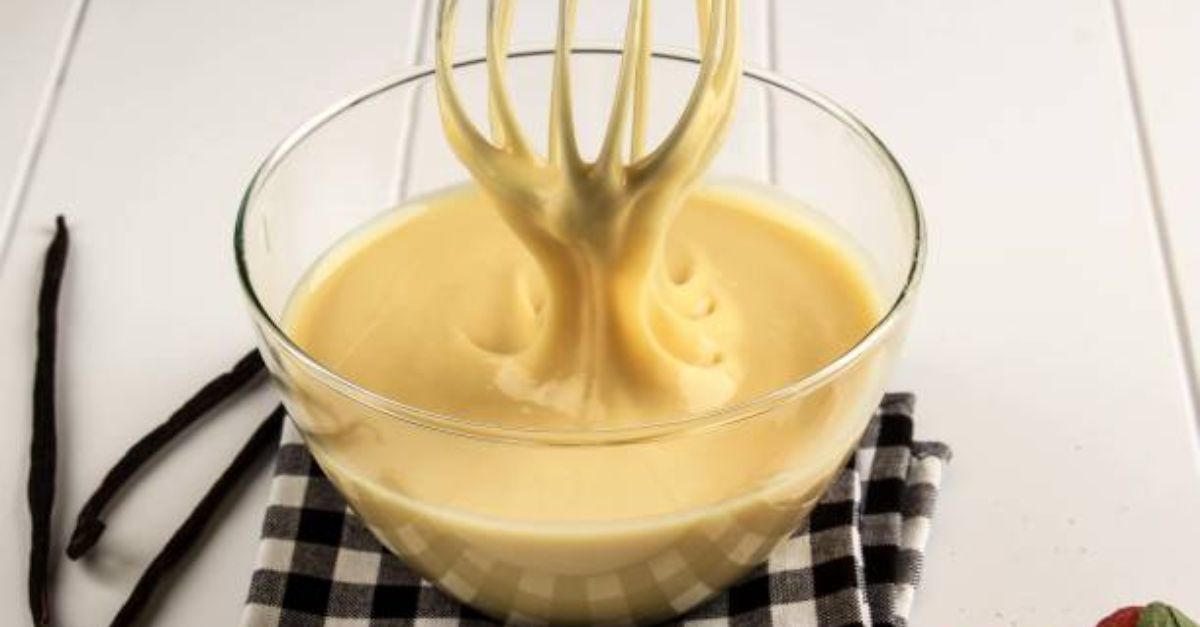
Real Vanilla: Please, for the love of all things sweet, use a real vanilla bean or a high-quality vanilla bean paste. The difference is astronomical. The little black specks are a promise of the deep, aromatic flavor within.
Ingredient List
2 cups (500 ml) whole milk
1 vanilla bean (or 1 tablespoon vanilla bean paste or 1½ teaspoons pure vanilla extract)
6 large (110 g) egg yolks
½ cup (100 g) granulated sugar
¼ cup (30 g) cornstarch
2 tablespoons (16 g) all-purpose flour
2 tablespoons (28 g) cold unsalted butter, cut into small pieces
(Optional) Pinch of salt
Step-by-Step Instructions
Phase 1: Infuse the Milk
Prepare the Vanilla: If using a vanilla bean, use a sharp paring knife to split it lengthwise down the middle. Use the back of the knife to scrape out the tiny black seeds from both halves.
Heat the Milk: Pour the milk into a medium, heavy-bottomed saucepan. Add the vanilla bean pod and the scraped seeds (or the vanilla bean paste). If using extract, do not add it now; it will be added later.
Bring to a Simmer: Place the saucepan over medium heat. Heat the milk until it’s just about to boil—you’ll see small bubbles forming around the edges of the pan, but it shouldn’t be at a roaring boil. Once hot, remove it from the heat, cover, and let it steep for 10-15 minutes to allow the vanilla flavor to fully infuse the milk.
Phase 2: Temper the Egg Yolks
Whisk Yolks and Sugar: While the milk is steeping, place the egg yolks and granulated sugar in a large, heatproof mixing bowl. Whisk immediately and vigorously until the mixture is pale, thick, and forms a “ribbon” when you lift the whisk (it should fall back into the bowl and leave a trail on the surface for a few seconds). This takes about 2-3 minutes of constant whisking.
Add the Starches: Sift the cornstarch and flour directly into the egg yolk mixture. This prevents lumps. Whisk until the starches are fully incorporated and the mixture is smooth and paste-like. There should be no dry bits left.
Phase 3: Cook the Cream
Temper the Mixture: Remove the vanilla bean pod from the hot milk (give it a rinse and save it to make vanilla sugar!). Slowly, while whisking the egg yolk mixture constantly, pour about one-third of the hot milk in a thin, steady stream. This is tempering—it slowly raises the temperature of the eggs so they don’t cook too quickly.
Combine and Return to Heat: Once tempered, pour the egg mixture back into the saucepan with the remaining milk. If using vanilla extract, add it now.
Whisk Over Heat: Place the saucepan back over medium heat. This is the most important step. Whisk constantly and vigorously, making sure to get into the corners of the pan. Do not stop, or the mixture will scorch and become lumpy.
Watch for the Thicken: After a few minutes, the mixture will begin to thicken dramatically. Keep whisking! You’ll see it transform from a liquid to a thick, pudding-like consistency. Once it becomes thick and you see one or two large bubbles burst on the surface, continue to cook and whisk for exactly 1 more minute. This cooks out the raw starch flavor.
Phase 4: Finish and Chill
Add the Secret Ingredient: Remove the pan from the heat immediately. Add the cold butter pieces and whisk until the butter is completely melted and the cream is smooth, glossy, and luscious.
Strain (Optional but Recommended): For the absolute silkiest texture, pour the pastry cream through a fine-mesh sieve into a clean, shallow dish. This will catch any potential tiny lumps.
Prevent a Skin: To keep a skin from forming on the surface as it cools, press a piece of plastic wrap directly onto the surface of the warm cream.
Chill: Refrigerate for at least 2 hours, or until completely cold. It will continue to firm up as it chills. Once cold, it’s ready to use!
Baker’s Tips for Success
Whisk, Don’t Stir: An actual whisking motion incorporates air and prevents lumps. A spoon just isn’t effective here.
Don’t Walk Away: Once the cream goes back on the heat, you are its loyal servant. Constant whisking is non-negotiable.
If It Lumps: Don’t panic! If your cream gets a little lumpy, you can often save it by passing it through a fine-mesh sieve or giving it a quick blitz with an immersion blender before adding the butter.
Flavor Variations: This is your canvas! Once the base is made, you can flavor it. Stir in:
Chocolate: 4 oz of finely chopped dark chocolate with the butter.
Coffee: 1-2 teaspoons of instant espresso powder dissolved in the milk.
Liqueur: 2 tablespoons of Grand Marnier, rum, or Kirsch after the cream has cooled slightly.
How to Use Your Pastry Cream
Fresh Fruit Tart: Fill a pre-baked tart shell and top with glazed strawberries, blueberries, and kiwi.
Cream Puffs & Éclairs: Pipe into cooled choux pastry shells.
Napoleons (Mille-Feuille): Layer between sheets of puff pastry.
Trifle: Layer with cake, fruit, and whipped cream.
Simple Dessert: Serve in small glasses topped with fresh berries.
Nutrition Information (per ¼ cup serving)
Calories: 145
Total Fat: 7g
Saturated Fat: 3.5g
Cholesterol: 135mg
Sodium: 25mg
Total Carbohydrates: 16g
Dietary Fiber: 0g
Total Sugars: 12g
Protein: 4g