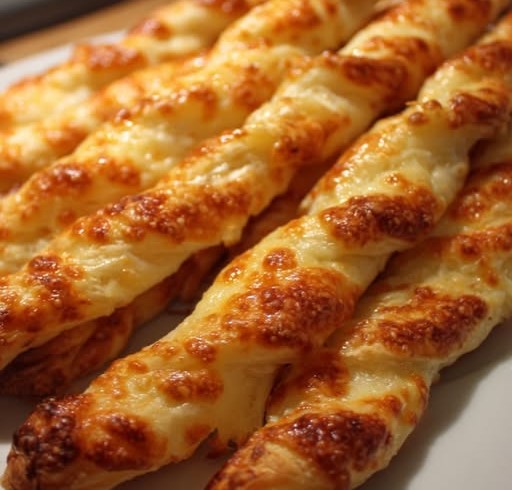
Prep Time: 25 minutes | Cook Time: 15-18 minutes | Total Time: ~45 minutes (plus optional chilling)
Skill Level: Beginner-Intermediate | Yield: 12-14 Twists
There’s something magical about the aroma of baking cheese and pastry that promises pure, savory satisfaction. Meet Käsetangen—the German cousin to the cheese straw, but bolder, flakier, and utterly irresistible. These golden-brown twists are a staple in German bakeries (Bäckereien) and a beloved treat at home. They combine the rich, melty goodness of sharp cheese with the delicate, buttery layers of puff pastry, all twisted into a snack that’s perfect with soup, salad, or simply on their own with an afternoon coffee.
The beauty of this recipe lies in its simplicity and speed. Using store-bought puff pastry as a shortcut, you can transform a few humble ingredients into an impressive homemade bakery treat in under an hour. The key is in the twist: not only does it create a beautiful, professional look, but it also maximizes the surface area for that perfect, crispy-chewy texture. Let’s bring the warmth of a German bakery right into your kitchen.
Ingredients
For the Käsetangen, you will need:
1 sheet (approx. 250g) store-bought puff pastry, thawed but cold. (All-butter pastry is highly recommended for the best flavor.)
150g (1 ½ cups) finely grated strong cheese. A mix works wonderfully: try 100g sharp aged Gouda or Cheddar for punch, and 50g Emmentaler or Gruyère for nutty meltiness.
1 large egg, beaten (for the egg wash)
2-3 tablespoons Dijon mustard (medium-hot, not grainy)
1 teaspoon sweet or smoked paprika
½ teaspoon garlic powder (optional, but delicious)
A pinch of freshly grated nutmeg
Freshly ground black pepper, to taste
A sprinkle of caraway seeds, sesame seeds, or coarse sea salt for topping (optional)
Equipment: Baking sheet, parchment paper, rolling pin, pastry brush, sharp knife or pizza cutter.
Step-by-Step Instructions
Step 1: Prep & Grate
Preheat your oven to 200°C (400°F). Line a large baking sheet with parchment paper. If your puff pastry isn’t already a rectangle, roll it out on a lightly floured surface to about 25cm x 35cm (10″ x 14″) and 3mm thickness. Ensure it’s cold to the touch; if it becomes too soft or sticky, pop it back in the fridge for 10 minutes. Finely grate all your cheese using a box grater or food processor. Mix the different cheeses together in a bowl for even distribution.
Step 2: Assemble the Flavor Base
Place the cold pastry rectangle on the prepared baking sheet. Using your pastry brush, evenly coat the entire surface with a thin layer of Dijon mustard, leaving a 1cm (½ inch) border along one of the longer edges—this will be the seal. The mustard adds a crucial tangy depth that cuts through the richness.
Sprinkle the paprika, garlic powder (if using), nutmeg, and a few grinds of black pepper directly over the mustard. Now, evenly distribute about two-thirds of your grated cheese over the seasoned mustard, again avoiding that clean border. Press down lightly so the cheese adheres.
Step 3: Fold & Create the Twists
This is the fun part! Carefully fold the pastry in half lengthwise, bringing the cheese-free long edge over to meet the opposite edge. You now have a long, narrow rectangle of double-layered pastry with cheese sealed inside. Press the edges together firmly, especially the long seam, to create a tight seal. You can use the tines of a fork to crimp it decoratively.
Using a sharp knife or pizza cutter, slice the folded pastry into 12-14 even strips, each about 2cm (¾ inch) wide.
Now, to twist: Take one strip by both ends. Gently lift and twist it in opposite directions 3-4 times, like wringing out a towel. The cheese-filled layers will peek through. Place the twisted strip back on the parchment-lined sheet. Repeat with all strips, leaving about 2.5cm (1 inch) between them as they will expand slightly.
Step 4: Egg Wash & Final Toppings
Brush the top of each twist generously with the beaten egg. This is what gives them that gorgeous, glossy, golden-brown finish. Sprinkle the remaining one-third of the grated cheese evenly over the twists. For an authentic bakery touch, add a light sprinkle of caraway seeds or coarse sea salt.
Pro-Tip: For extra flakiness, place the entire baking sheet with the assembled twists in the refrigerator for 10-15 minutes before baking. This re-chills the butter in the pastry, leading to a better rise.
Step 5: Bake to Golden Perfection
Place the baking sheet in the preheated oven. Bake for 15-18 minutes, or until the Käsetangen are puffed, deeply golden brown, and the cheese is bubbling and slightly caramelized at the edges. Rotate the sheet halfway through for even browning.
Step 6: Cool & Serve
Remove from the oven and let the twists cool on the baking sheet for at least 5 minutes. They are best served warm, when the cheese is still gooey and the pastry is at its peak flakiness. Transfer to a wire rack if not serving immediately.
Serving & Storing Suggestions
Serving: Käsetangen are incredibly versatile. Serve them as an appetizer with a cold German beer or a glass of dry Riesling. They are a classic accompaniment to a hearty bowl of pumpkin or lentil soup, or a fresh green salad. They also make for a fantastic party platter item or a packed lunch treat.
Storing: These are truly best eaten the day they are made. However, you can store cooled leftovers in an airtight container at room temperature for up to 2 days. Re-crisp them in a 175°C (350°F) oven for 5 minutes. They also freeze beautifully before baking! Assemble the twists up to the point of egg washing, then freeze them solid on the baking sheet before transferring to a freezer bag. Bake straight from frozen, adding 3-5 minutes to the baking time.
Nutritional Information (Per Twist, based on yield of 12):
Calories: ~180 kcal
Total Fat: 12g
Saturated Fat: 5g
Cholesterol: 25mg
Sodium: 220mg
Total Carbohydrates: 12g
Dietary Fiber: <1g
Sugars: <1g
Protein: 6g