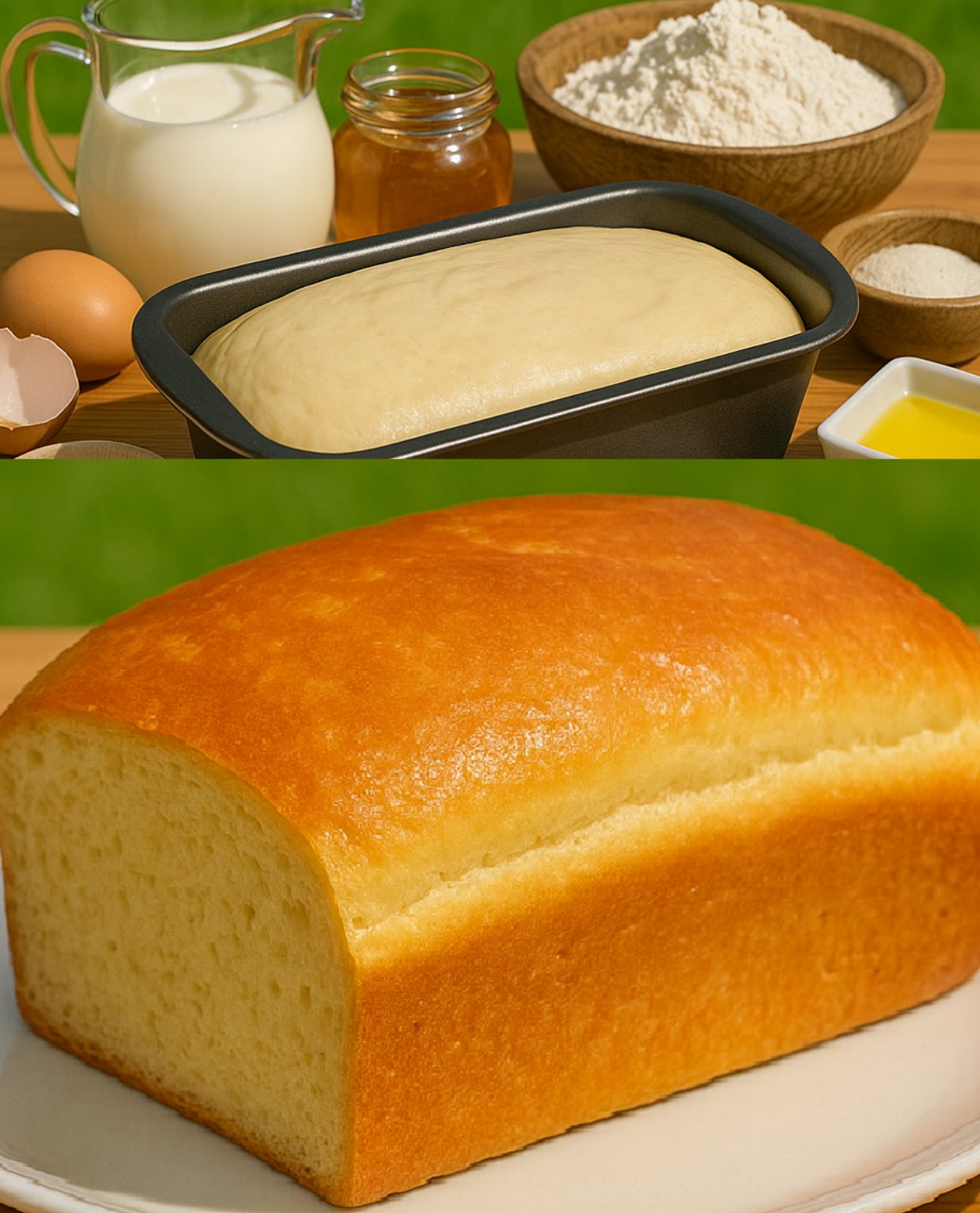
-
Prep Time: 25 minutes (plus 15 minutes hands-off)
-
Rise Time: 1 hour 45 minutes – 2 hours 15 minutes
-
Bake Time: 35-40 minutes
-
Total Time: Approximately 3 – 3.5 hours
-
Skill Level: Intermediate (Involves yeast handling and shaping)
-
Yield: 1 beautiful 9×5-inch loaf (about 16 slices)
Ingredients
For the Dough:
-
1 cup (240ml) full-fat buttermilk, warmed to about 110°F (43°C)
-
⅓ cup (115g) warm water (110°F/43°C)
-
¼ cup (85g) mild, runny honey (like clover or wildflower)
-
2 ¼ teaspoons (1 packet / 7g) active dry yeast
-
2 tablespoons (28g) unsalted butter, melted and cooled slightly, plus extra for greasing
-
1 ½ teaspoons (9g) fine sea salt
-
3 ½ – 4 cups (440-500g) bread flour (all-purpose flour works, but bread flour is ideal), divided
For Finishing:
-
1 tablespoon buttermilk or whole milk, for brushing
-
1 tablespoon honey, warmed slightly, for glazing (optional)
Instructions
Step 1: Activate the Yeast & Make the Dough
In the bowl of a stand mixer fitted with the dough hook (or a large mixing bowl if kneading by hand), combine the warmed buttermilk, warm water, and honey. Sprinkle the yeast over the liquid and let it sit for 5-7 minutes until foamy and fragrant—this “proofing” ensures your yeast is alive and active.
Add the melted butter, salt, and 3 ½ cups (440g) of the bread flour. Mix on low speed until a shaggy dough forms, about 2 minutes.
Step 2: Knead the Dough
Increase the mixer speed to medium and knead for 6-8 minutes. The dough should pull away from the sides of the bowl and become smooth, soft, and slightly tacky but not sticky. If it remains very sticky, add the remaining flour, one tablespoon at a time, until it clears the bowl. If kneading by hand, turn the dough onto a lightly floured surface and knead vigorously for 10-12 minutes until smooth and elastic.
Step 3: First Rise (Bulk Fermentation)
Lightly butter a clean large bowl. Shape the dough into a ball, place it in the bowl, and turn to coat in butter. Cover tightly with plastic wrap or a damp kitchen towel.
Let the dough rise in a warm, draft-free place for 1 to 1 ½ hours, or until it has nearly doubled in size. This timing can vary with kitchen temperature. To test, gently press two fingers about ½ inch into the dough; if the indentations remain, it’s ready.
Step 4: Shape the Loaf
Butter a standard 9×5-inch loaf pan. Gently deflate the risen dough and turn it out onto a lightly floured surface. Using your hands, press and shape it into a rough 8×10-inch rectangle, with the long side facing you.
Tightly roll the dough away from you into a firm cylinder. Pinch the final seam closed, then pinch the ends and tuck them under. Place the loaf, seam-side down, into the prepared pan. Press it down gently to ensure it touches the ends of the pan.
Step 5: Second Rise (Proofing)
Cover the pan loosely with the plastic wrap or towel. Let rise again for 45 minutes to 1 hour, or until the dough has crowned about 1 inch above the rim of the pan. Meanwhile, preheat your oven to 375°F (190°C).
Step 6: Bake to Perfection
Just before baking, brush the loaf’s surface lightly with buttermilk or milk for a rich color. Bake in the preheated oven on the center rack for 35-40 minutes. The bread is done when it is deep golden brown, sounds hollow when tapped on the bottom, and the internal temperature registers 190°F (88°C) on an instant-read thermometer.
Step 7: Cool & Glaze
Immediately remove the loaf from the pan and transfer it to a wire rack. For a beautiful sheen and extra hint of sweetness, brush the warm crust with the optional tablespoon of warmed honey. This is the most critical step for texture: allow the bread to cool completely for at least 2 hours before slicing. This allows the steam to settle and the crumb to set, preventing a gummy texture.
Nutrition Information
Serving Size: 1 slice (of 16)
-
Calories: 165 kcal
-
Total Carbohydrates: 31g
-
Dietary Fiber: 1g
-
Sugars: 6g
-
Protein: 5g
-
Total Fat: 2.5g
-
Saturated Fat: 1.5g
-
Cholesterol: 6mg
-
Sodium: 240mg