Total Time: 2 hours 30 minutes (including rising time)
Active Prep Time: 25 minutes
Cooking Time: 20 minutes
Difficulty: Medium (requires patience with yeast dough)
Yield: 10-12 muffins
Description:
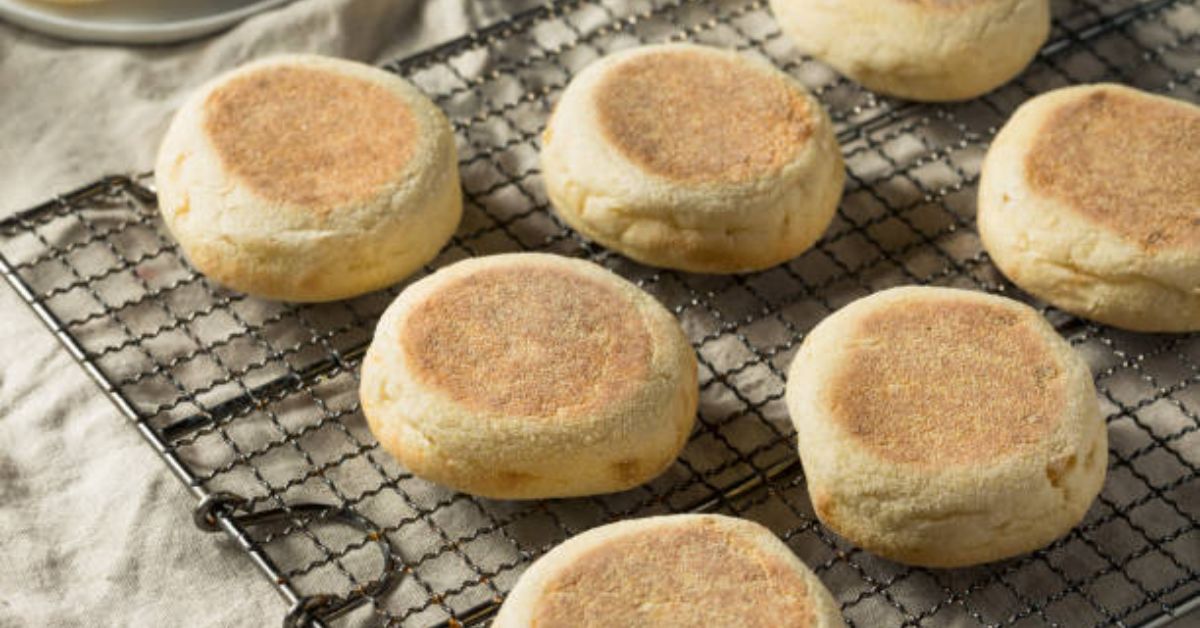
Forget the store-bought version! These homemade English Muffins boast a craggy, porous interior perfect for holding pools of melted butter and jam, encased in a crisp, cornmeal-dusted golden crust. The process is a rewarding kitchen project, filling your home with the warm, yeasty scent of fresh bread. Master this recipe, and you’ll have the ultimate base for Eggs Benedict, the best breakfast sandwich of your life, or simply a sublime vehicle for your favorite preserves.
Ingredients
For the Dough:
-
1 cup (240ml) whole milk, warmed to about 110°F (43°C)
-
2 tablespoons (25g) granulated sugar
-
2 ¼ teaspoons (1 packet / 7g) active dry yeast
-
2 cups (250g) bread flour (plus up to ½ cup extra for dusting)
-
1 cup (125g) all-purpose flour
-
1 ¼ teaspoons fine sea salt
-
2 tablespoons (28g) unsalted butter, softened
-
Non-stick cooking spray or extra butter for bowl
For Cooking & Finishing:
-
½ cup (70g) fine cornmeal or semolina flour, for dusting
-
2-3 tablespoons neutral oil (like vegetable or canola), for the griddle
-
Butter, for serving
Equipment
-
Stand mixer with dough hook (optional but helpful)
-
Large mixing bowl
-
Dough scraper
-
Rolling pin
-
3-inch (7.5 cm) round biscuit cutter or drinking glass
-
Large cast-iron skillet, electric griddle, or heavy-bottomed frying pan
-
Baking sheet
-
Parchment paper
-
Fork (for splitting)
Instructions
Step 1: Activate the Yeast
In the bowl of your stand mixer or a large liquid measuring cup, combine the warmed milk, sugar, and yeast. Stir gently and let it sit for 5-10 minutes until foamy and fragrant. This “proofing” step confirms your yeast is active.
Step 2: Make the Dough
-
By Mixer: To the yeast mixture, add the bread flour, all-purpose flour, salt, and softened butter. Fit the mixer with the dough hook and mix on low speed until a shaggy dough forms, about 2 minutes. Increase speed to medium and knead for 7-8 minutes until the dough is smooth, elastic, and slightly tacky but not sticky.
-
By Hand: In a large bowl, whisk the flours and salt. Make a well in the center and pour in the yeast mixture. Add the softened butter. Use a wooden spoon and then your hands to bring the dough together. Turn it out onto a lightly floured surface and knead vigorously for 10-12 minutes until smooth and elastic.
Step 3: First Rise (1 hour)
Lightly grease a large bowl with cooking spray or butter. Shape the dough into a ball, place it in the bowl, and turn to coat. Cover the bowl tightly with plastic wrap or a damp kitchen towel. Let it rise in a warm, draft-free place until doubled in size, about 1 hour. (Tip: An oven with the light on is a perfect proving drawer).
Step 4: Shape the Muffins
-
Punch down the risen dough to release air bubbles. Turn it out onto a surface dusted with cornmeal (not flour—this is key for the classic texture).
-
Using a rolling pin, roll the dough to a ½-inch (1.25 cm) thickness.
-
Dip your 3-inch round cutter in cornmeal and cut out rounds as close together as possible. Press straight down without twisting for the best rise. Place the cut rounds onto a baking sheet generously dusted with cornmeal.
-
Gently re-roll the scraps and cut out remaining muffins. You should get 10-12.
Step 5: Second Rise (30 minutes)
Sprinkle the tops of the muffins generously with more cornmeal. Cover them loosely with a clean kitchen towel and let them rise again for 30 minutes. They will puff up noticeably.
Step 6: Cook the Muffins
-
Heat a large cast-iron skillet or griddle over medium-low heat. This is crucial—too hot, and they’ll burn before cooking through. Add just enough oil to lightly coat the surface.
-
Carefully transfer the risen muffins to the hot skillet using a spatula. Do not crowd them; cook in batches.
-
Cook for 6-8 minutes per side. The goal is a deep, golden-brown crust and a firm center. The internal temperature should reach about 200°F (93°C) when fully cooked. If they are browning too quickly, reduce the heat.
-
Transfer cooked muffins to a wire rack to cool completely. This is essential: splitting them while warm can ruin the delicate crumb structure.
Step 7: Serve & Store
-
To serve, use a fork to split the muffins open all around their equator, revealing the prized nooks and crannies. Toast until golden and crisp.
-
Storage: Cool completely, then store in an airtight container at room temperature for up to 2 days. For longer storage, freeze in a resealable bag for up to 3 months. Toast directly from frozen.
Nutrition Information (Per muffin, based on yield of 12)
| Nutrient | Amount | % Daily Value* |
|---|---|---|
| Calories | ~180 kcal | |
| Total Fat | 5g | 6% |
| Saturated Fat | 2g | 10% |
| Cholesterol | 10mg | 3% |
| Sodium | 250mg | 11% |
| Total Carbohydrate | 28g | 10% |
| Dietary Fiber | 1g | 4% |
| Sugars | 3g | |
| Protein | 5g |