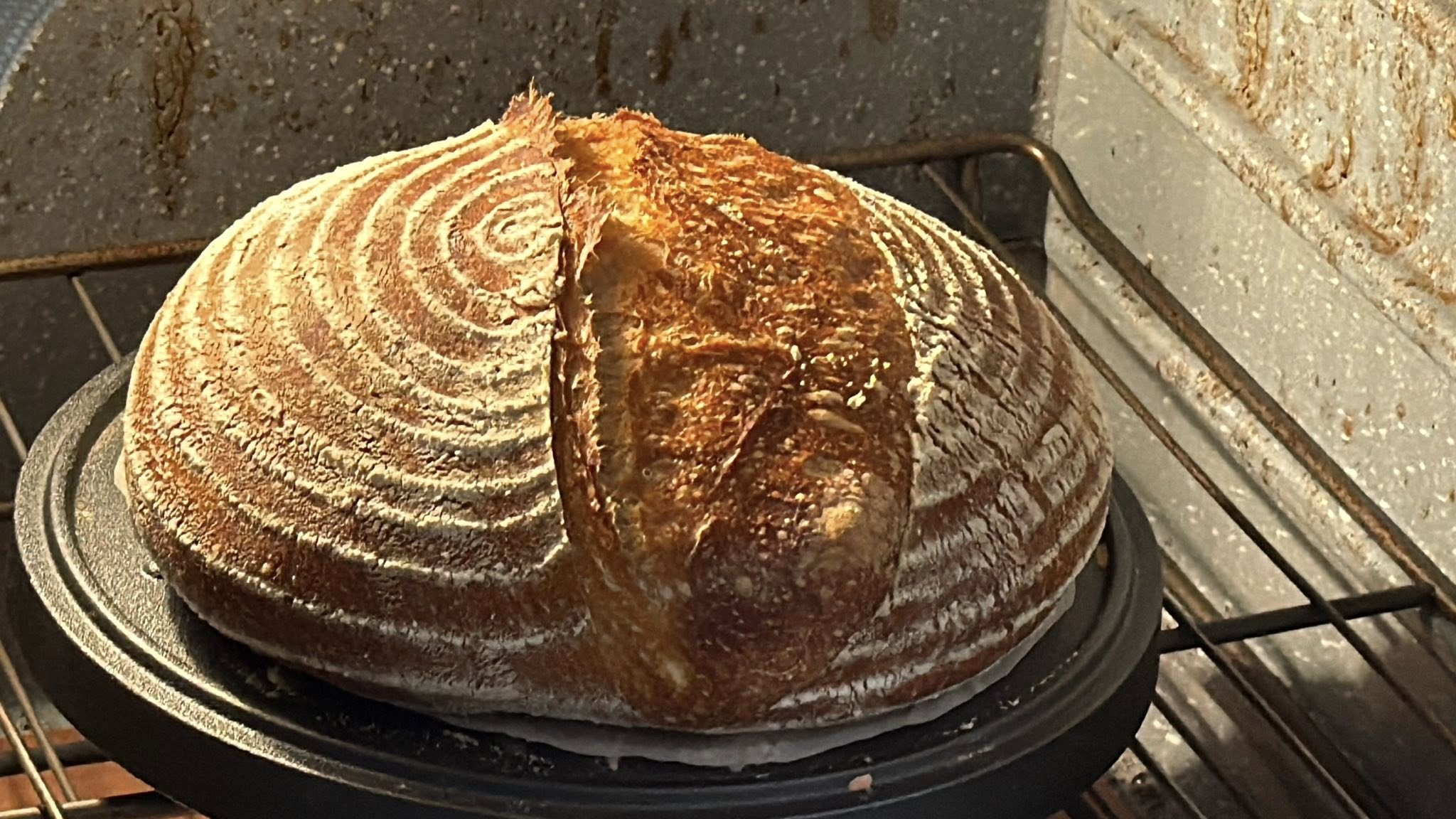
*Yield: 1 large boule (about 2 lbs) | Prep Time: 30 minutes active, plus overnight fermentation | Total Time: 12-24 hours | Difficulty: Intermediate (but approachable!) | Calorie Count: ~90 calories per 1 oz slice*
There’s nothing quite like the deep, resonant crackle of a freshly baked sourdough boule, its crust shattering to reveal a tangy, open, and chewy crumb. This recipe demystifies the process, breaking it into clear stages for a beautiful, bakery-worthy loaf using your own active sourdough starter. The magic happens with time, not just effort, making this a perfect weekend project.
The Soul of the Loaf: Understanding Your Starter
Before you begin, ensure your sourdough starter is active, bubbly, and has doubled in size 4-8 hours after its last feeding. If it passes the “float test” (a spoonful floats in water), it’s ready to leaven your dough. This natural leavening is what gives sourdough its complex flavor and superior keeping qualities.
Ingredients
430 grams bread flour (or strong white flour)
70 grams whole wheat or rye flour (for flavor and texture)
375 grams lukewarm water (about 90°F/32°C)
100 grams active, bubbly sourdough starter
10 grams fine sea salt
Rice flour or extra bread flour for dusting
Equipment: Digital kitchen scale, large mixing bowl, bench scraper, banneton proofing basket (or a medium bowl lined with a heavily floured tea towel), Dutch oven with lid, razor blade or sharp knife for scoring.
Method
Stage 1: Autolyse & Mixing (Gentle Beginning)
Time: 30 minutes hands-off, 5 minutes active
Intensity: Low
In a large bowl, combine the 430g bread flour and 70g whole wheat flour. Add 375g of lukewarm water and mix with your hands or a spatula until no dry flour remains. The dough will be shaggy. Let this mixture rest, covered, for 30 minutes. This autolyse (pronounced auto-leez) allows the flour to fully hydrate, developing gluten with minimal effort.
After resting, add the 100g of active starter and mix thoroughly until fully incorporated. It will be sticky. Let it rest, covered, for another 30 minutes. Finally, sprinkle the 10g of salt over the dough. Wet your hand slightly to prevent sticking, and pinch and fold the salt into the dough until evenly distributed.
Stage 2: Bulk Fermentation & Coil Folds (Building Strength)
Time: 4-6 hours
Intensity: Medium (short, spaced-out activity)
This is the dough’s primary rise. Cover the bowl and place it in a warm spot (ideally 75-78°F / 24-26°C). Over the next few hours, you’ll perform a series of “coil folds” to build the dough’s strength without traditional kneading.
At 30-minute intervals, perform 4 sets of coil folds. To do this: Wet your hands, reach under one side of the dough in the bowl, gently lift it up, and fold it over itself toward the opposite side. Rotate the bowl 90 degrees and repeat. Do this on all four “sides.” The dough will transform from sticky and loose to smooth, strong, and cohesive.
After the last fold, let the dough rest, covered, for the remainder of the bulk fermentation. It is ready when it has increased in volume by about 50-75%, looks puffy, and has a few surface bubbles. This timing is flexible and temperature-dependent.
Stage 3: Shaping & Cold Proof (Developing Flavor)
Time: 30 minutes active, 8-16 hours inactive
Intensity: Medium
Pre-Shape & Bench Rest: Lightly flour your work surface. Gently tip the dough out. Using wet hands and a bench scraper, fold the edges into the center to create a loose round. Let it rest, uncovered, for 20-30 minutes. This relaxes the gluten for final shaping.
Final Shape: Dust the top of the dough lightly with flour. Using your bench scraper, gently flip it over so the floured side is down. Gently stretch the edges out and fold them into the center like an envelope, then roll the dough over onto its seams. Using the scraper and your other hand in a cupping motion, drag the dough gently toward you to create surface tension—the key to a good oven spring.
Prepare the Banneton: Heavily dust a banneton or towel-lined bowl with a 50/50 mix of rice flour and bread flour. Rice flour prevents sticking spectacularly.
Final Proof: Place the dough, smooth side down (seam side up), into the banneton. Cover with a reusable bag or damp tea towel and place it in the refrigerator for 8 to 16 hours. This long, cold ferment is where deep, tangy flavor develops.
Stage 4: Baking (The Grand Finale)
Time: 1 hour
Intensity: High (at the start)
Preheat: Place your Dutch oven (with the lid on) in your oven. Preheat to 475°F (245°C) for at least 45 minutes.
Score: Carefully remove the cold dough from the fridge. Place a piece of parchment paper over the banneton, flip it over, and gently lift the banneton away. The dough should hold its shape. Using a razor blade, score the top with one confident, deep (¼ inch) slash or a simple pattern. This controls the expansion in the oven.
Bake: Using oven mitts, remove the scorching-hot Dutch oven. Lift the dough by the parchment paper and lower it into the pot. Cover with the lid.
Bake Covered: Bake for 25 minutes. This creates a steamy environment for maximum oven spring and a glossy, blistered crust.
Bake Uncovered: Reduce the oven temperature to 450°F (230°C). Remove the lid—behold the risen loaf! Bake for another 20-25 minutes until the crust is a deep, burnished brown and sounds hollow when tapped on the bottom.
Cool: This is the hardest part: Let the boule cool completely on a wire rack for at least 3-4 hours before slicing. The interior is still setting; cutting it early releases steam and results in a gummy crumb.
The Last Slice: Storage & Enjoyment
Your sourdough boule will have its best texture and flavor on days 1 and 2. Store it cut-side down on a cutting board or in a bread bag at room temperature. The crust will soften over time, but the flavor will deepen. To restore crispness, reheat a slice in a toaster or a 350°F oven for 5 minutes.
For longer storage, slice and freeze. The complex, tangy flavor makes it perfect for everything from simple buttered toast and avocado smash to hearty sandwiches and as the ideal companion to soups and stews.
Nutritional Information (Per 1 oz / 28g slice)
Calories: ~90
Total Fat: 0.3g
Sodium: 190mg
Total Carbohydrates: 18g
Dietary Fiber: 1g
Sugars: 0.1g
Protein: 3g