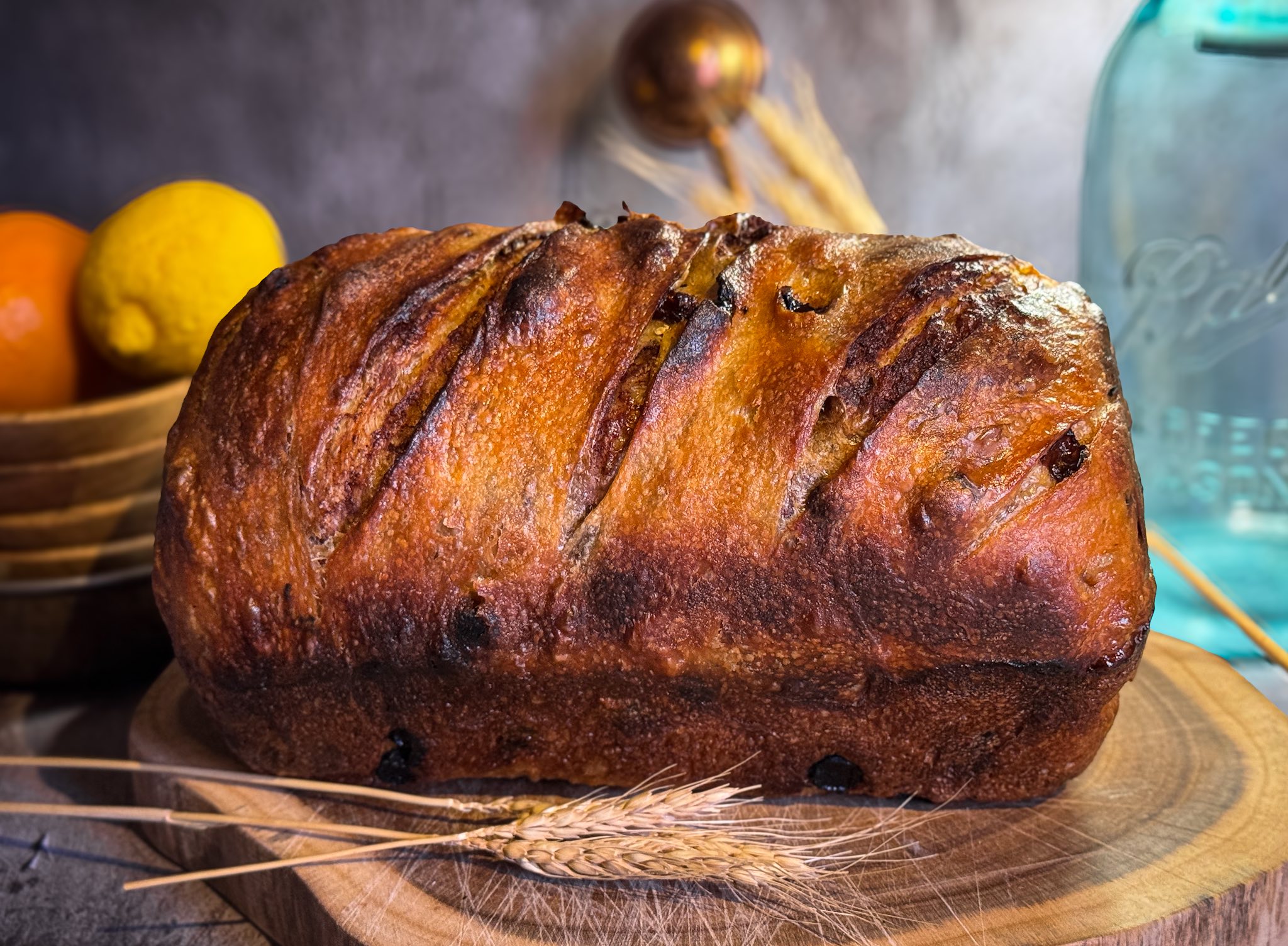
Prep Time: 30 minutes (plus 2 hours rising)
Cook Time: 40 minutes
Total Time: 3 hours 10 minutes
Course: Bread, Breakfast
Cuisine: American
Diet: Vegetarian
Skill Level: Intermediate (Requires comfort with yeast dough)
Yield: 1 standard loaf (about 12 slices)
Equipment: Stand mixer with dough hook (optional but helpful), 9×5-inch loaf pan, rolling pin, pastry brush.
Ingredients
For the Dough:
1 cup warm whole milk (110°F/43°C)
2 ¼ teaspoons (1 packet) active dry yeast
¼ cup granulated sugar, divided
3 ¼ cups (415g) bread flour (all-purpose works, but bread flour is better)
1 large egg, at room temperature
¼ cup (57g) unsalted butter, softened
1 teaspoon fine sea salt
1 cup raisins (pre-soaked – see instructions)
1 teaspoon vegetable oil (for greasing the bowl)
For the Cinnamon-Sugar Filling:
⅓ cup packed light brown sugar
2 tablespoons granulated sugar
1 ½ tablespoons ground cinnamon
¼ teaspoon ground nutmeg (optional but recommended)
2 tablespoons unsalted butter, melted (for brushing)
For the Egg Wash (Optional):
1 egg, beaten with 1 tablespoon milk or water
Optional Topping: 1 tablespoon coarse sugar or pearl sugar for sprinkling.
Instructions
Step 1: Activate the Yeast & Pre-Soak Raisins
In the bowl of a stand mixer or a large mixing bowl, combine the warm milk, yeast, and 1 teaspoon of the sugar. Stir gently and let sit for 5-10 minutes until foamy and fragrant. This “proofs” the yeast, ensuring it’s alive.
Meanwhile, place the raisins in a small bowl and cover with very hot water. Let them soak while you prepare the dough. This plumps them up, preventing them from drying out during baking. Drain and pat dry thoroughly before using.
Step 2: Make the Dough
To the yeast mixture, add the remaining sugar, egg, softened butter, salt, and 3 cups of the flour. Using the dough hook attachment (or a wooden spoon), mix on low speed until a shaggy dough forms, about 2 minutes.
Gradually add the remaining ¼ cup of flour, 1 tablespoon at a time, until the dough pulls away from the sides of the bowl but is still slightly tacky to the touch. Knead on medium speed for 6-8 minutes, or by hand on a lightly floured surface for 10 minutes, until smooth and elastic.
Gently knead in the well-drained raisins until evenly distributed.
Shape the dough into a ball. Lightly grease a large bowl with vegetable oil, place the dough inside, and turn to coat. Cover tightly with plastic wrap or a damp kitchen towel.
Step 3: First Rise
Let the dough rise in a warm, draft-free place until doubled in size, about 1 to 1.5 hours. A good test: gently press two fingers into the dough; if the indentation remains, it’s ready.
Step 4: Shape & Fill
Gently deflate the risen dough and turn it out onto a lightly floured surface. Roll it into a 9×16-inch rectangle.
Brush the entire surface with the 2 tablespoons of melted butter, leaving a ½-inch border around the edges.
In a small bowl, mix the brown sugar, granulated sugar, cinnamon, and nutmeg. Sprinkle this mixture evenly over the buttered dough.
Starting with the short end (the 9-inch side), tightly roll the dough into a log, pinching the seam to seal. Pinch the ends closed and tuck them under.
Step 5: Second Rise
Lightly grease a 9×5-inch loaf pan. Place the dough log, seam-side down, into the pan.
Cover loosely with the towel and let rise again until the dough crowns about 1 inch above the rim of the pan, about 45 minutes to 1 hour. Preheat your oven to 350°F (175°C) during the last 20 minutes of rising.
Step 6: Bake
For a glossy, golden crust, gently brush the top of the loaf with the optional egg wash. Sprinkle with coarse sugar, if using.
Bake on the center rack for 35-40 minutes, or until the top is deep golden brown and the internal temperature reads 190°F (88°C) on an instant-read thermometer. (This is the most reliable test for doneness!)
If the top browns too quickly, tent it loosely with aluminum foil for the last 15 minutes of baking.
Step 7: Cool & Serve
Remove the loaf from the oven and let it cool in the pan for 10 minutes. Then, carefully transfer it to a wire rack to cool completely (at least 2 hours) before slicing. This is crucial—slicing too early releases steam and results in a gummy texture.
Recipe Notes & Tips
Milk Temperature: Too hot will kill the yeast; too cold won’t activate it. Aim for the temperature of a warm bath.
Kneading: Proper kneading develops gluten, which gives the bread its structure. The dough is ready when you can gently stretch a small piece into a thin, translucent “windowpane” without it tearing.
Make-Ahead: You can complete the first rise, shape the loaf, and then cover and refrigerate it overnight for its second, slow rise. Bake directly from the fridge in the morning.
Storage: Store cooled bread in an airtight bag or container at room temperature for up to 3 days. For longer storage, slice and freeze for up to 3 months. Toast slices directly from the freezer.
Nutrition Information (Per Slice, Approximate – 1/12 of loaf)
Calories: 285 kcal
Carbohydrates: 52g
Protein: 6g
Fat: 7g
Saturated Fat: 4g
Cholesterol: 35mg
Sodium: 215mg
Fiber: 2g
Sugar: 23g