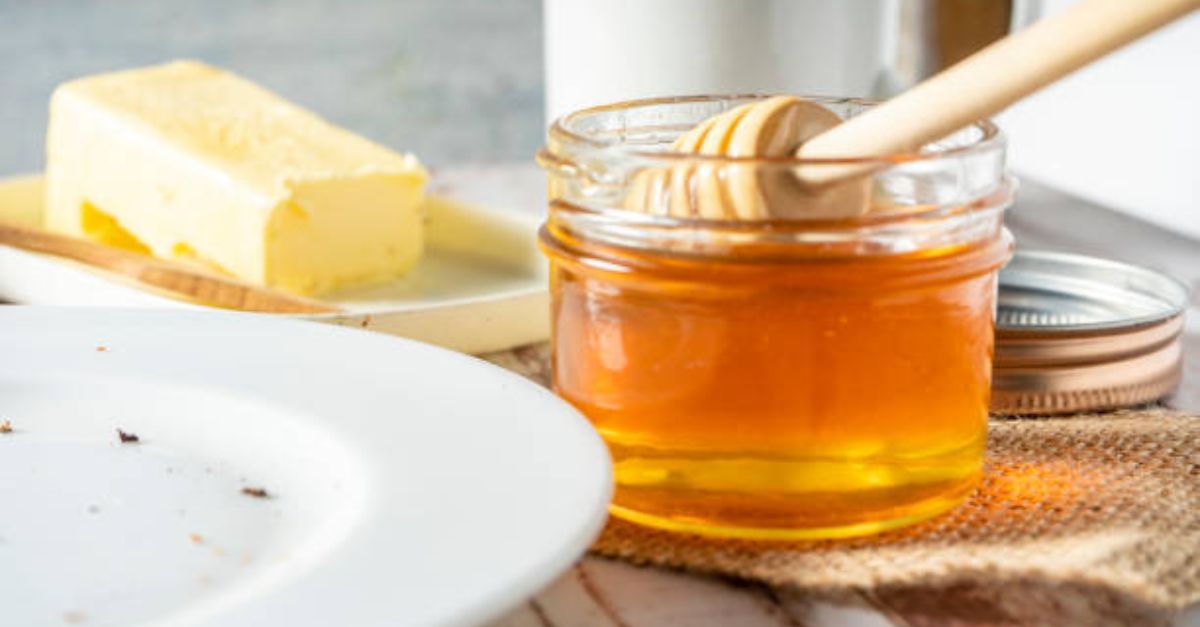
Prep Time: 2 minutes
Cook Time: 10 minutes
Cooling Time: 20 minutes
Total Time: 32 minutes
Intensity Levels:
-
Effort: Low (1/5 – simple simmering)
-
Flavor Complexity: Medium (develops a floral, honey-like depth)
-
Technique Difficulty: Easy (requires careful temperature control)
Why You Need This Keto Honey
Real honey is liquid gold for most people—but on a ketogenic diet, it’s pure sugar in disguise. One tablespoon of raw honey contains 17 grams of net carbohydrates, enough to derail ketosis for an entire day. This homemade keto honey substitute solves that problem completely. It mimics the viscosity, sweetness, and even the floral notes of real honey using zero-sugar ingredients. Drizzle it over keto biscuits, stir it into herbal tea, glaze your low-carb salmon, or use it in salad dressings. Unlike store-bought sugar-free syrups that taste artificial or contain maltitol, this recipe uses allulose for authentic crystallization resistance and monk fruit for clean sweetness.
Ingredients
| Ingredient | Amount | Notes |
|---|---|---|
| Allulose | 1 cup (200g) | Essential for honey-like texture; does not crystallize like erythritol |
| Water | ½ cup (120ml) | Filtered water preferred |
| Monk fruit extract powder | ½ teaspoon (or 15 drops liquid) | Use pure extract, not granular blends |
| Apple cider vinegar (raw) | ½ teaspoon | Adds slight tang and mimics honey’s acidity |
| Xanthan gum | ¼ teaspoon | For thickness and “threading” quality |
| Bee-free bee essence OR chamomile tea bag | Optional: ¼ teaspoon essence or 1 bag | Adds floral/honey aroma |
Ingredient Deep Dive: Allulose is the star here. It caramelizes like real sugar, doesn’t cause digestive distress in moderate amounts, and has a glycemic index of zero. Do not substitute with erythritol—it will crystallize into a gritty mess once cooled.
Equipment Needed
-
Small heavy-bottomed saucepan (non-reactive, like stainless steel)
-
Silicone whisk or heatproof spatula
-
Fine-mesh strainer
-
Glass jar with tight-fitting lid (8oz or larger)
-
Instant-read thermometer (optional but helpful)
-
Dropper (for optional flavor essence)
Instructions by Intensity Phase
Phase 1: The Base (Low Intensity – 5 minutes)
-
Combine dry and wet basics. In your saucepan, whisk together the allulose and water. Turn the heat to medium-low. Stir gently until the allulose completely dissolves. This should take about 2 minutes. Do not bring to a boil yet.
-
Add the acid and heat. Once dissolved, add the apple cider vinegar. Turn heat up to medium. Insert your thermometer if using. Allow the mixture to come to 210°F (99°C) – just below a rolling boil. You should see small bubbles breaking the surface, not violent bubbling.
Phase 2: Thickening & Texture (Medium Intensity – 8 minutes)
-
Simmer with precision. Maintain a gentle simmer at 210–215°F. Let it cook uncovered for 6–8 minutes. Do not stir during this period (agitation can cause crystallization later). You’ll notice the liquid reducing and becoming syrupy.
-
Test for honey consistency. Use the “spoon test”: Dip a cold metal spoon into the syrup. Let it drip back. The last drops should cling and form a thin, slow-falling sheet – not watery like simple syrup, and not thick like molasses. If it’s still runny, simmer 1-2 more minutes.
-
Incorporate xanthan gum (critical step). Remove the pan from heat. Let it cool for 60 seconds. Sprinkle the ¼ teaspoon of xanthan gum evenly over the surface. Immediately whisk vigorously for 30 seconds. You’ll see the syrup suddenly thicken and turn glossy. Do not add more xanthan gum – it will turn into a gel.
Phase 3: Flavoring & Finishing (Low Intensity – 2 minutes)
-
Add honey notes. Whisk in the monk fruit extract (start with ¼ teaspoon, taste, then add remaining ¼ teaspoon if needed). If using bee-free essence, add 4-5 drops. If using chamomile tea: drop the tea bag into the warm syrup, cover, and steep for 3 minutes, then remove and squeeze gently.
-
Strain and cool. Pour the syrup through a fine-mesh strainer into your glass jar. Let it sit uncovered at room temperature for 20 minutes. Do not refrigerate while warm – this causes cloudiness.