Prep Time: 40 minutes
Cook Time: 2 hours 15 minutes
Total Time: 3 hours (plus optional resting)
Serves: 4-6 people
Difficulty: Intermediate (requires careful rolling and patience)
Intensity: A hands-on, project-style recipe perfect for a weekend or special occasion. The active prep is detailed, but the braising time is largely hands-off, filling your kitchen with an incredible aroma.
Introduction
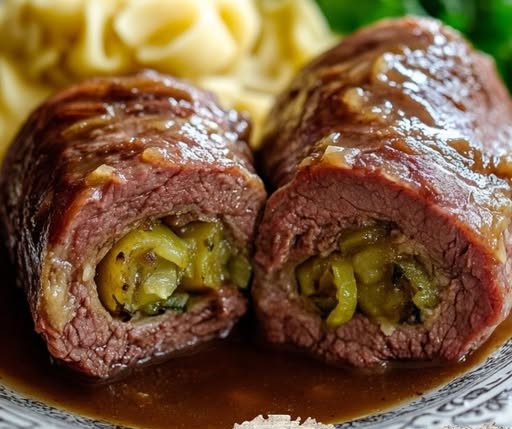
German Rouladen is more than just a recipe; it’s a cornerstone of Hausmannskost (home cooking), embodying comfort, tradition, and resourcefulness. Thin slices of beef are swaddled around a savory filling of bacon, onions, mustard, and pickles, then slowly braised until melt-in-your-mouth tender in a rich, gravy that is the star of the show. Served with classic sides like red cabbage and potato dumplings or buttery mashed potatoes, this dish is a deeply satisfying, celebratory meal worth every minute of its preparation.
Ingredients
For the Rouladen:
4-6 slices of top-round beef, cut about 1/4-inch thick (approx. 8×6 inches each). Ask your butcher to prepare them specifically for Rouladen.
German medium-hot mustard (Löwensenf or similar Dijon mustard)
4-6 slices of thick-cut bacon, cut in half lengthwise
1 large yellow onion, finely diced
2-3 medium dill pickles (German Gewürzgurken if available), cut into lengthwise spears
Salt and freshly ground black pepper
Butcher’s twine or toothpicks
2 tablespoons neutral oil (like canola or vegetable)
For Braising and Gravy:
1 large carrot, diced
1 large stalk celery, diced
1 onion, diced
2 tablespoons tomato paste
2 cups good-quality beef broth
1 cup dry red wine (like a Pinot Noir) or substitute with additional broth
2 bay leaves
4-5 whole juniper berries, lightly crushed (optional but traditional)
3-4 whole cloves (optional)
2 tablespoons all-purpose flour
2 tablespoons softened butter (for beurre manié)
Salt and pepper to taste
Instructions
Step 1: Prepare the Beef
Lay the beef slices flat on a clean work surface. Using the back of a knife or a meat tenderizer, gently pound them to an even 1/8-inch thickness, being careful not to tear the meat. Season lightly with salt and pepper on both sides.
Step 2: Assemble and Roll
Layer the flavors: Spread a generous, even layer of mustard over the top side of each pounded slice. Place one or two strips of bacon lengthwise down the center. Sprinkle a line of diced onions along the bacon, then place a pickle spear (or two, depending on size) at one short end.
The Roll: Starting from the pickle end, tightly roll up the beef, tucking in the filling as you go. The goal is a compact, cylindrical roll.
Secure: Tie each roulade securely in 3-4 places with butcher’s twine, or secure the seam and ends with sturdy toothpicks. Season the outside lightly with pepper.
Step 3: Brown the Rouladen
In a large, heavy-bottomed Dutch oven or pot with a lid, heat the oil over medium-high heat.
Add the rouladen and brown them deeply and thoroughly on all sides. This is a crucial step for building flavor—don’t rush it. This should take about 8-10 minutes total. Remove the rouladen to a plate and set aside.
Step 4: Build the Braising Base
Reduce the heat to medium. Add the diced carrot, celery, and onion (the Soffritto) to the pot. Cook, stirring occasionally, until softened and beginning to brown, about 8-10 minutes.
Stir in the tomato paste and cook for 1-2 minutes until it darkens slightly.
Pour in the red wine (if using) to deglaze, scraping up all the browned bits from the bottom of the pot with a wooden spoon. Let it simmer for 2-3 minutes.
Pour in the beef broth and add the bay leaves, juniper berries, and cloves. Bring to a gentle simmer.
Step 5: The Long Braise
Return the browned rouladen to the pot, nestling them into the liquid and vegetables. The liquid should come about halfway up the sides of the meat.
Cover the pot with the lid slightly ajar. Reduce the heat to the lowest possible setting to maintain a bare simmer. Let the rouladen braise gently for 1.5 to 2 hours, turning them once halfway through, until the meat is fork-tender.
Step 6: Create the Rich Gravy
Carefully remove the cooked rouladen to a platter, tent with foil, and let them rest.
Strain the braising liquid through a fine-mesh sieve into a bowl, pressing on the vegetables to extract all their flavor. Discard the solids. Skim off excess fat from the surface of the liquid.
Return the strained liquid to the pot and bring to a simmer. In a small bowl, mash together the softened butter and flour to form a smooth paste (beurre manié).
Whisk the paste into the simmering liquid, a little at a time, until the gravy thickens to a rich, coating consistency. You may not need all of it. Let it simmer for 5 minutes to cook out the flour taste. Season with salt and pepper to taste.
Step 7: Serve
Remove the twine or toothpicks from the rouladen. You can slice them into medallions or serve whole.
Pour the hot, velvety gravy over the rouladen. Serve immediately with your favorite German sides.
Chef’s Notes & Serving Suggestions
The Secret is in the Braise: Low and slow is non-negotiable. A rapid boil will make the meat tough.
Make-Ahead Magic: Rouladen taste even better the next day. Prepare the dish completely, let it cool, and refrigerate. Reheat gently on the stovetop the following day. The flavors will have melded beautifully.
Perfect Pairings: This dish demands classic accompaniments. Serve with Rotkohl (braised red cabbage), Semmelknödel (bread dumplings) or Kartoffelpüree (creamy mashed potatoes) to soak up every drop of the incredible gravy.
Nutrition Information (Per Serving, based on 6 servings)
Calories: ~520 kcal
Total Fat: 32g
Saturated Fat: 12g
Cholesterol: 125mg
Sodium: 980mg (varies with broth)
Total Carbohydrates: 12g
Dietary Fiber: 2g
Sugars: 4g
Protein: 38g